Misty Flinders Street
Mike Barr
Mike Barr Recent Paintings
http://artofbarr.blogspot.com/
--

I saw an oddity yesterday.” Ali Baba Goes to Town” 1937. It is the only Eddie Cantor I’ve ever seen, as I don’t find his brand of humour amusing. But I watched it because of a one line description I read.
In it, Eddie is an extra on an Arabian Nights set, and falls asleep and dreams he is in Ancient Baghdad. The Sultan is experiencing social unrest and Eddie’s solution is to have him impose Democracy and New Deal solutions to solve all of Persia’s ills.
He has the Sultan give up his Sultanate, impose elections, and change his position to President. To placate the poor and indigent, he has the Sultan creates breadlines (one wheat, one rye), he introduces high taxes for the very rich, and creates public works projects to put the unemployed to work building roads to nowhere and building bridges in the desert. When the Sultan observes there are no rivers in the desert, Eddie says build the bridges anyway, we’ll find the rivers later. He says this kind of thing works very well in America.
The weaver of the Magic Carpet can’t find the right magic words to make fly. Eddie says that the President in the United States says one word, and everything goes up: “Inflation!” he shouts, and the carpet flies.
There’s one scene where the Sultan has visitors from all countries paying homage to him, but he can’t communicate with the delegation from Nubia. Eddie tries phrases in Arabic, Spanish, French, and Yiddish to no avail, then gets an inspiration and says Heidi-Ho, Heidi-Hay and they connect using Callowayisms.
This is very funny, and would have been just fine had they left it there. But Eddie puts on blackface and leads them in a bop-swing number. The only redeeming feature of this (by today’s standards) is the sight of stone faced Visier-villain John Carridine, tall, dressed all in black, unwillingly succumbing to the rhythms of the music and unconsciously snapping his fingers to the beat. One of the secondary bands names is the Baghdaddies.
Not bad, and surprisingly, pretty trenchant criticism throughout of the New Deal.
You are so lucky.
I did not see Ali Baba, but I wish I had.
One of my fondest childhood memories is an ancient 78 my grandmother had, which we played on a large, wind-up Victrola. It was "That Old Sultan's Harem", or "Give Me That Harem", or some such, by Eddie.
It was done just after World War I, and it referenced the Peace Conference at Versailles, where the Allies were digging into
the assets of the defeated Central Powers. Thus, it was a kind of contemporary satire:
A website had the lyrics as follows:
I dreamed that I was at the Peace Conference,
Where England and France and Italy
Each got her share of her indemnity.
And after they divided up the dish,
They asked me if there's anything that I'd wish.
I was so shy, I thought they'd die,
When I made this reply:
CHORUS:
Give me the Harem, the old Sultan's Harem,
That's the only thing I crave.
The Sultan's too old, for he's past eighty-three,
And his thousand wives need a fellow like me.
I'll never beat them, with kindness I'll treat them,
And all the I ask is a trial;
Imagine me sitting on a carpeted floor,
Telling my slave to bring me wife "Ninety Four."
I'll be so gallant, I'm chucked full of talent,
Won't you give that Harem to me?
This, however, is not quite correct.
Since I have heard it many times when I was young, I know that it begins thusly:
I had a dream last night that was immense,
I dreamt that I was at the Peace Conference...
That I am correct is demonstrated by the second stanza, which goes:
The diplomats all listened to my plea,
They wondered just what was the matter with me,
But I kept on asking for a trial,
I tried to show them it was worth the while.
Just then they asked if I was qualified,
And I replied, "You folks will be satisfied,
I'll prove to you, that I'll be true,
But here's what you must do:"
there are 8 lines - count 'em.
The first stanza as they have it only has 7 lines.
Too bad about the blackface, but it was counted a legit art form at the time, and I must really strain
to see anything too vile in a shared stereotype experience. I would like to know more about Cantor and
Jolson and others to learn about what their understanding of it was.
Ah, the Vizier is always the villain.
Even though there were major domos in Old Baghdad, corresponding a bit to butlers, there must
have been a saying: "The Vizier Did It!"
Did they actually locate Baghdad in Persia?
Yes, Persia is referred to.
In the election the Sultan, Abdullah, is referred to as Honest Abe. He has 365 wives in his Harem. Eddie suggests that they should be unionized and wonders what the Sultan does in leap years.
By the way, the Sultan is running unopposed, and Eddie gets elected as a write in because:
1) his name is Al Babson which the locals construe as Ali Baba Jr, and
2) and that he was really behind all the Sultan's reforms (and they liked his swing tune).
He only loses in two upstate Persian districts Mainisha and Vermontica (or something like that; Maine and Vermont it turns out are the only two states Roosevelt didn't carry in the 1936 election).
Eddie fears the angry Sultan will "berl him in erl". The redoubtable and reliable Douglas Dumbrille once again plays an evil prince and his consort is Louise Hovick (aka Gypsy Rose Lee).


...the Werther effect, named for Goethe’s novel The Sorrows of Young Werther, about a young man who puts a gun to his head to end the agony of unrequited love and because he can’t find his place in the provincial bourgeois society of the day. The novel’s publication, in 1774, prompted young men all over Europe to dress like Werther and take their lives. It’s also called the contagion effect and copycat suicide: one person does it, and that lowers the threshold, making it easier and more permissible for the next. Like 10 people waiting at a crosswalk for the light to change, and one of them jaywalks. This gives the rest of them the go-ahead.I disagree that one person's doing a thing makes it permissible. Rather, it makes it "Imaginable", and from being imagined, it provides a viable way of acting and doing - life threatening though it is.


A Cleveland man was trying to stop a friend from driving drunk when the would-be drunk driver shot him in the chest.... John Marshall


I will never again have to hear some uninformed pundit or politician drone on about how Ahmadinejad threatened to wipe Israel off the face of the map, which he did not. This stupid debate was only possible because the journalists in Washington and New York apparently do not trust me (I’m looking at you, Ethan Bronner) to know the difference between a transitive and intransitive verb or accurately to translate Persian into English.
The late Christopher Hitchens even managed to convince himself that he knew Persian better than I. It is a profound mark of contemporary America’s anti-intellectualism that a professor of Middle Eastern history with numerous refereed works to his name on Iran and Shiite Islam at prominent academic presses should be assumed not to know the grammar every Iranian schoolchild does.
This whole ‘wiped off the face of the map’ mania among Western journalists was just war propaganda, in which they seem unashamed to join, and which causes them to vilify anyone who stands in their way.--

 Piranesi did a series of drawings entitled I Carceri, The Prisons.


When the Pentagon Papers were first leaked to the New York Times, White House chief of staff H.R. Haldeman shared a fascinating insight with President Richard Nixon. Haldeman had been talking about the papers with another Nixon aide -- Donald Rumsfeld -- who had said that “to the ordinary guy, all this is a bunch of gobbledygook.”
“But out of the gobbledygook comes a very clear thing,” Haldeman told Nixon. “You can’t trust the government. You can’t believe what they say. And you can’t rely on their judgment. And the implicit infallibility of presidents, which has been an accepted thing in America, is badly hurt by this, because it shows that people do things the President wants to do even though it’s wrong, and the President can be wrong.”(emphasis mine)


In a new interpretation of the Espionage Act, a federal judge made it easier for prosecutors in leak cases to meet their burden of proof, while reducing protections for accused leakers.
Judge Colleen Kollar-Kotelly ruled that the prosecution in the pending case of former State Department contractor Stephen Kim need not show that the information he allegedly leaked could damage U.S. national security or benefit a foreign power, even potentially. Her opinion was a departure from a 30-year-old ruling in the case of U.S. v. Morison, which held that the government must show that the leak was potentially damaging to the U.S. or beneficial to an adversary. (In that case, Samuel L. Morison was convicted of unauthorized disclosure of classified intelligence satellite photographs, which he provided to Jane’s Defence Weekly. He was later pardoned by President Clinton.)
“The Court declines to adopt the Morison court’s construction of information relating to the ‘national defense’ insofar as it requires the Government to show that disclosure of the information would be potentially damaging to the United States or useful to an enemy of the United States,” Judge Kollar-Kotelly wrote in a May 30 opinion. The opinion was redacted and unsealed (in partially illegible form) last week.
The prosecution must still show that the defendant “reasonably believed” that the information “could be used to the injury of the United States or to the advantage of a foreign nation” and that the defendant “willfully” communicated it to an unauthorized person. But it would no longer be necessary for prosecutors to demonstrate that the information itself could potentially damage national security or benefit an adversary.
The new ruling was a boon to prosecutors and a blow to the defense in the Kim case and perhaps other leak trials to come.Sieg Heil, or what you will...

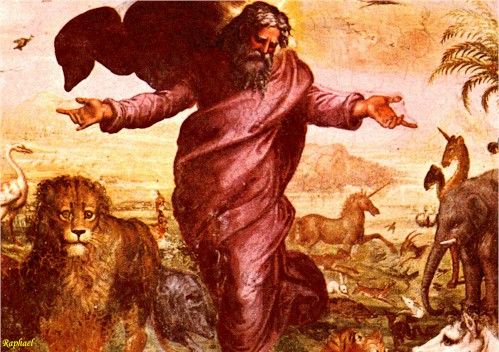
Early man, roaming around in small bands through large and often empty spaces, was confronted by a preponderance of animals... Many of them existed in enormous numbers. Whether it was herds of buffaloes or springboks, shoals of fish, or swarms of locusts, bees, or ants, their numbers rendered those of man insignificant.
For the progeny of man is sparse, coming singly and taking a long time to arrive. The desire to be more, for the number of people to whom one belongs to be larger, must always have been profound and urgent, and must, moreover, have been growing stronger all the time... Man's weakness lay in the smallness of his numbers... In the enormously long period of time during which he lived in small groups, he, as it were, incorporated into himself, by transformations, all the animals he knew. It was through the development of transformation that he really became man; it was his specific gift and pleasure.This continues on to a discussion of Australian aborigines, whose ancestors believed themselves of a dual nature, both animal and human at once, each ancestor embodying a specific animal as part of themselves.

Early man, roaming around in small bands through large and often empty spaces, was confronted by a preponderance of animals... Many of them existed in enormous numbers. Whether it was herds of buffaloes or springboks, shoals of fish, or swarms of locusts, bees, or ants, their numbers rendered those of man insignificant.The sheer numbers of life were awesome. The living carpets of fauna and flora which covered the land - in the New World of America it was only 200 years ago that dense and tall forests stretched for hundreds of miles; dark forests whose canopies of leaves choked out the sun - inspired man to transform part of himself into the overwhelming life around him. He identified with animals and plants, creating totem identities. Each man had two natures: his human and his animal; the human belonging to the comparatively small group of his band, the animal belonging to the other world of life on a greater scale. (At this point, we may speculate that the visionary experience was a description of the connection between these two realms of man, how man travelled from the one to the other, and how he acted within the totem realm.)


 )
"On the morning following the Night of Qadr, the sun rises not having any rays, as if it were a brass dish, until it rises up."which is a way of looking at things that is rather refreshing.


Conventional media wisdom posits several ways for a newspaper to commit suicide. It can drive up costs by multiplying staff and pagination. It can prioritise print over digital. It can erect a hard paywall to seal itself from the internet.Survival by concentrating by doing what you do the best you possibly may. That is innovative, especially in a time when most content and quality is compromised to increase profits. Look at any industry and you can see a conscious choice to reduce quality or reduce content; from Orange Juice - the 64 oz. containers now have 59 oz. - to newspapers, such as in Detroit, where the Detroit newspapers led the way into journalistic irrelevance.
Or, if you are the Orange County Register, you can do all three. The California daily did so almost exactly a year ago, prompting astonishment and morbid curiosity. How long would it last? In a crisis-stricken industry more accustomed to death by a thousand cuts, the Register, which dates back a century, at least promised a dramatic and original demise.
But this week, as the paper prepares to celebrate the experiment's first anniversary, it appears to be thriving. "It's working," marvelled the editor, Ken Brusic. "We believe that this will work."
The paper's ambitious expansion and defiance of conventional wisdom has cheered and baffled the industry. Is it for real? Is there a magic formula to avert cutbacks and slumping circulation?...
Register staff – the newsroom has doubled to 360 in the past year – exude giddy, wary optimism that their paper has a bright future. Instead of rewriting stories they are filling multiple new sections with original reporting. "Feel the weight. This has 10 sections – and on a Tuesday. If it hit your cat, you'd kill it," said Rob Curley, deputy editor of local news.


 Posts
All Comments