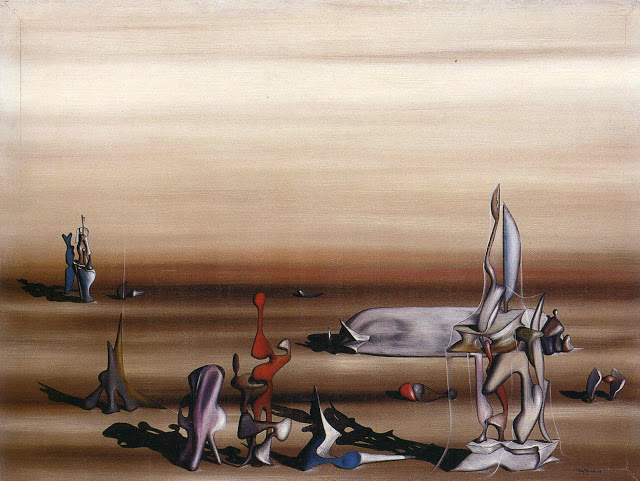
Valley Pasture
Quilting and Thread Work
Jean McLaughlin Cowie and PatriciaGould
as featured in Capital City Arts Initiative
--
...Congress has sat on its hands while the Fed has sought to boost the U.S. economy with tools that are particularly ill-suited. The central bank’s main instruments for boosting the economy — its target for interest rates — has been at rock bottom for four years and counting. It has tried buying trillions of dollars in longer-term securities, which seems to have helped propel the stock market and lower mortgage and other interest rates, but the Fed appears to be getting less bang for every hundred billion bucks it deploys — and the strategy has come at some risk of inflation and new bubbles...

...Egypt has become deeply polarised. Many pious, ordinary citizens agree that performers such as Mr Youssef come close to exceeding the bounds of decency. Egyptian law forbids any insult to religion, while tradition immunises Arab heads of state from public ridicule. Yet it remains striking that whereas the Morsi government has opted to punish its critics, it has largely spared right-wing religious commentators who deride Egypt’s opposition as infidels, routinely blast Jews and Shias, and incite hatred against Egypt’s large Christian minority. Moreover, its resort to hounding the press smacks of the methods used by Hosni Mubarak’s ousted regime.
Or, indeed, of other Arab countries, where satirists in particular have paid a high price for dissent. Since November, Sami Fehri, a Tunisian producer of a political puppet show that mocked his country’s Islamist leaders, has been in prison on corruption charges. Nadim Koteich, whose bitterly sarcastic take-offs of politicians, in particular those of Hizbullah, the Shia party-cum-militia, are popular on Lebanon’s Future TV, often gets death threats. Raif Badawi, a Saudi blogger, has been in jail since last June for “ridiculing Islamic religious figures”. Hadi al-Mahdi, an Iraqi radio humorist, was shot dead in 2011.
The region’s leaders might pause to ponder the words of Ahmed Sanoussi, a Moroccan comedian better known as Bziz. After an 18-year ban from appearing in public, he was asked if there should be any rules for satire. “Yes,” he said, “to attack only the powerful, not the weak.”

Plans from Brussels put the onus on bank depositors, rather than the taxpayer, to bear the costs of bank failures.
"Cyprus was a special case ... but the upcoming directive assumes that investor and depositor liability will be carried out in case of a bank restructuring or a wind-down," Mr Rehn, the European Economic and Monetary Affairs Commissioner.
"But there is a very clear hierarchy, at first the shareholders, then possibly the unprotected investments and deposits. However, the limit of €100,000 (£85,000) is sacred, deposits smaller than that are always safe."
Mr Rehn was referring to a directive being drafted by the European Commission on bank safety which would set out investor liability in the law of member states. He was speaking in an interview with Finnish TV after Cyprus last month forced richer depositors to suffer heavy losses in order to secure a €10bn bail-out from the EU and the International Monetary Fund.
Cyprus had initially planned to make people with deposits under the crucial €100,000 mark to take a cut also, before backtracking in the face of an outcry. Smaller deposits are supposed to be protected by state guarantees.
Mats Persson, director of think-tank Open Europe said: "Rehn was only re-stating what's in an EU proposal tabled in 2012, which quite sensibly suggests a mechanism whereby first, investors and secondly, large depositors - rather than taxpayers - foot the bill when a bank goes bust.... "

CODY, Wyo. — For many, the federal budget ax that fell last month has meant a few nicks here and there. For Joe Kondelis, it's sliced a lot deeper.
After stewing for days, the 53-year-old opened his wallet and delivered a $2,000 check to the Cody Chamber of Commerce to help pay for snowplowing at Yellowstone National Park. It wasn't easy. Cash is scarce once Yellowstone shuts down for the winter.
But after automatic spending cuts idled the National Park Service plows and threatened to delay opening day for two weeks — two weeks that could cost his beer distributorship $100,000 in sales — Kondelis felt he had no choice...
But a weave of contradictions surrounds the episode, reflecting the tension between self-sufficiency and codependence, between these Westerners' stated desire for a smaller, more limited government and reliance on the services that people have come to expect from far off, little-loved Washington, D.C.
"We all want to cut the deficit but don't want to sacrifice the lifestyle that money makes possible," said Warren Murphy...

If the accusation were not true, then the defamation was well invented.

...[Mr.] Brill’s article makes one comprehend not just the talk in Washington about the supposed absolute necessity of replacing Medicare and Medicaid with “market-oriented” health care, but also the full human cost such a change would bring.
If the elderly and the poor are stripped of the few protections these government programs give them, they’ll be left at the mercy of a medical industry and insurance companies whose already huge profits, so they imagine, will then get even bigger.
Despite the claims that these are high-minded proposals that will fix our national debt, and despite their veneration as such by the political establishment and the media, what is being offered to the American people is nothing more than thinly-disguised money-making scams.
We all remember, I hope, the cheers that went up in the audience during the GOP’s presidential debate last spring in Tampa when Ron Paul, the libertarian candidate and former doctor, stated that he would let an uninsured man lying in a coma die without lifting a finger.
“That’s what freedom is all about, taking your own risk,” he said. “This whole idea that you have to compare and take care of everybody…” at which point, a few members of the audience shouted “Yeah,” cutting off the congressman in mid-sentence.


When the financial crisis struck in 2008, nearly every state legislature was left contending with massive revenue shortfalls. Every state legislature, that is, except North Dakota’s. In 2009, while other states were slashing budgets, North Dakota enjoyed its largest surplus. All through the Great Recession, as credit dried up and middle-class Americans lost their homes, the conservative, rural state chugged along with a low foreclosure rate and abundant credit for entrepreneurs looking for loans.
Normally one of the overlooked states in flyover country, North Dakota now had the country’s attention. So did an unlikely institution partly responsible for its fiscal health: the Bank of North Dakota. Founded in 1919 by populist farmers who’d gotten tired of big banks and grain companies shortchanging them, the only state-owned bank in America has long supported community banks and helped keep credit flowing.
The bank’s $5 billion deposit base comes mostly from state taxes and funds. The money is leveraged so the bank can offer loans for local small businesses and infrastructure projects; the interest, rather than going to Wall Street banks, stays in the state. The Bank of North Dakota rarely makes direct loans; instead, when a community bank wants to give a sizable loan but lacks the capital, the state bank will partner on the loan and provide a backstop. Such partnerships help ensure that small-business owners, farmers, and ranchers can access lines of credit—and they strengthen community banks, which is why North Dakota has more local banks per capita than any other state...
... policy experts like Sam Munger, the managing director at the University of Wisconsin-Madison Center for State Innovation, say that by offering partnerships and avoiding the risky practices of commercial banks, like subprime lending, the state bank was instrumental in keeping community banks healthy. “It’s partly because you have civil servants in charge,” he says, “rather than folks whose paychecks depend on how much money the bank makes in a quarter.”...

The problem with escalating health-care costs is actually pretty simple.
The people who make decisions about medical costs (doctors, hospitals, insurance companies, drug companies, device manufacturers) have a vested interest in seeing us spend more money on health care, not less. More money in the system means more chances for them to grab a share.
The one player in the game with the power and interest to control medical costs is Medicare. Medicare has so much market power that it can buy care at reasonable prices. Patients have a powerful advocate, and it’s very popular with beneficiaries. It has its own center for experimenting with better pay incentives to health care systems to get better care for more people at lower cost. (Hospitals don't get paid when they let things go wrong.) If Congress would permit it, Medicare could bargain for drugs at reasonable prices and pay only for devices that have been proven to work. But Congress will not.
Even though Congress won’t let a plan like this move forward all at once, what if we looked for a way to phase in this solution over time?

Chart shows growth in per capita costs in Medicare and private insurance. Medicare has done a better job of holding costs down. (Data from Centers for Medicare and Medicaid Services.)
First, let’s look at the various players in the current system and the specific problems they face. Then, we’ll come back to the solution...Good read.


The debate over exactly how many Christians were persecuted and martyred may seem irrelevant centuries later. A scholarly consensus has indeed emerged that Roman persecution of Christians was sporadic, and that at least some Christian martyrdom stories are theological tall tales.
But a new book by Candida Moss, a New Testament professor at the University of Notre Dame, is bringing that message to the masses...
If the first Christians pictured themselves as waging war against the world, the martyrs were their version of the Navy SEALs. They were the elite Christians who inspired and united others of their faith.Navy SEALs !?? You have got to be kidding.


Verily I say unto you, Whatsoever ye shall bind on earth shall be bound in heaven: and whatsoever ye shall loose on earth shall be loosed in heaven.I read this as applying to the Law and how it governs the actions of mankind: whatever actions you make mandatory will be seen as mandatory in heaven, and whatever actions you make free of the Law will be seen as free of the Law in heaven.
..."The pope does not need anybody's permission to make exceptions to how ecclesiastical law relates to him," noted conservative columnist Jimmy Akin in the National Catholic Register. But Akin echoed concerns raised by canon lawyer Edward Peters, an adviser to the Vatican's high court, that Francis was setting a "questionable example" by simply ignoring the church's own rules.If I were to affix a RC label to myself, it would say "traditionalist". However, it would not say "traditionalist who thinks his personal history has a unique validity."
"People naturally imitate their leader. That's the whole point behind Jesus washing the disciples' feet. He was explicitly and intentionally setting an example for them," he said. "Pope Francis knows that he is setting an example."
The inclusion of women in the rite is problematic for some because it could be seen as an opening of sorts to women's ordination. The Catholic Church restricts the priesthood to men, arguing that Jesus and his 12 apostles were male.
Francis is clearly opposed to women's ordination. But by washing the feet of women, he jolted traditionalists who for years have been unbending in insisting that the ritual is for men only and proudly holding up as evidence documentation from the Vatican's liturgy office saying so.
"If someone is washing the feet of any females ... he is in violation of the Holy Thursday rubrics," Peters wrote in a 2006 article that he reposted earlier this month on his blog....


In this Sunday, Aug. 26, 2012 file photo, Syrian rebel fighter Tawfiq Hassan, 23, a former butcher, poses for a picture, after returning from fighting against


... the case of Rachel Hoffman, a 23-year-old college graduate.
In 2008, she was caught with marijuana and ecstasy in her apartment. To escape charges that could have resulted in a five-year prison term, she agreed to become an undercover informant for the Tallahassee Police Department
The police sent her out on a sting operation with $13,000 (£8,600) in cash to buy cocaine, ecstasy and a gun from two convicted criminals.
But despite the presence of 19 undercover officers, and a surveillance plane circling overhead, police lost track of her.
"She never had any police training, they never did a dry run of this, there was no tracking device in her car," says her father, Irv Hoffman, a mental health counsellor.
Rachel Hoffman was murdered with the gun the police had sent her to buy when the suspects found a police recording device in her purse.

Ponka-We Victors (D-Wichita), a member of the Ponca Tribe of Oklahoma and the Tohono O'odham Nation, and the only American Indian in the Kansas State Legislature, offered her reading of the situation to Kris Kobach, Kansas' Secretary of State.
The encounter takes on added significance when one considers the man Victors was addressing. Kris Kobach is known around the country as an anti-immigration hawk, and had a hand in such controversial measures as Arizona's SB 1070. As Mother Jones puts it, "if there's a controversial new anti-immigration law that's captured national attention, chances are that it has Kris Kobach's imprimatur."
"I think it’s funny Mr. Kobach, because when you mention illegal immigrants, I think of all of you," Victors said...http://indiancountrytodaymedianetwork.com/2013/03/22/native-legislator-ponka-we-victors-turns-tables-immigration-hearing-kansas-148309
...The practice known as "walking down grain" is illegal. Federal penalties for employers who permit or require it, however, are routinely pared. Since 1984, OSHA has cut initial fines for grain-entrapment deaths by nearly 60 percent overall, an analysis of enforcement data by the Center for Public Integrity and NPR shows. And even in the worst instances of employer misconduct, no one has gone to jail.
Twenty-six people died in entrapments in 2010, the worst year in decades. At least 498 people have suffocated in grain bins since 1964, according to data analyzed for the Center and NPR by William Field, a professor of agricultural and biological engineering at Purdue University.
At least 165 more people drowned in wagons, trucks, rail cars or other grain storage structures. Almost 300 were engulfed but survived. Twenty percent of the 946 people caught in grain were under 18.
“At some point we’re going to have to decide whether these incidents are just accidental … [or] somebody’s really making horrendous decisions that approach a criminal level,” said Field, who has studied entrapments since 1978 and served as an expert witness in grain-death lawsuits and as an industry and OSHA consultant. “It’s intentional risk-taking on the part of the managers or someone in a supervisory capacity that ends up in some horrific incidents. The bottom line is if you ask them why they did it, it was because it was more profitable to do it that way.”

...Von Trier’s statement that Melancholia is the first of his films with a happy ending further reveals the whole film as a cruel trick on the audience: couched in the language of what is considered “serious film” today is a fantasy as romantic to its maker as a vampire drama to teenage girls. I can just imagine Lars smirking up a storm in the dark while critics ooh and aah over this emptiness.

How could Jesus give power to a small group of leaders and send them forth to convert the world, since He must have known full well that one of the biggest fruits of a church of many believers would be worldy possessions and riches...
those very material things which would make it difficult if not impossible to enter the kingdom of heaven?and gave an answer:

CAPE CANAVERAL, Florida, Mar. 19, 2013 (Reuters) — NASA chief Charles Bolden has advice on how to handle a large asteroid headed toward New York City: Pray. That's about all the United States - or anyone for that matter - could do at this point about unknown asteroids and meteors that may be on a collision course with Earth, Bolden told lawmakers at a U.S. House of Representatives Science Committee hearing on Tuesday...Mr. Bolden has underscored the irony of the present:

Veteran observer of his nation's way of life, Oxford-based French writer Theodore Zeldin agrees that a business-style culture has made huge inroads into France - the bane of all those who prefer to take the time to savour things:
"Companionship has been replaced by networking. Business means busy-ness, and in that way we are becoming like everywhere else," he says.


 Posts
All Comments