Search This Blog

Showing posts with label philosophy. Show all posts

Monday, March 20, 2017

Truth

Katerina Witt

 (I could not find a suitable picture of Ludwig Wittgenstein so I got one from my date with Katerina Witt.)


Although we have all grown up idolizing Wittgenstein, his assumption of a world of facts is a metaphysicsal construct that sort of assumes what it was to prove, at least in the dim-light-bulb factory of my head.

Propositional logic applies to propositions. Period. A true proposition corresponds to a Fact in the world, at least we hope so.
However, there are no "true" facts in the world - "true" in the same sense as propositions are true.
Wittgenstein wants a Fact to stand for what-is-the-case, which is the surrogate for "true" in the logic of non-propositional worlds.

OK. But how does one finds these happy, happy facts?

We have religion and politics. Consider them. In politics, in a political party, we may have millions of adherents, each of whose belief system varies from that of their fellows in small degree or in large degree; they may contain contradictions.
Indeed, our own beliefs may contain contradictions, for as Christians we believe in love and peace, but as political Christians , we believe in force and compulsion... and that is the way of all flesh.

How does one describe these belief systems? Obviously if they contain contradictions, they cannot correspond to a Fact of the world in the Wittgenstein sense. Even if they differ in varying degrees, it is difficult how to see they correspond to any Fact.

Any reality may have a logic. Propositions have propositional logic. Then there are facts of the world and Wittgenstein tried to speak of what was almost unspeakable: the underlying Facts of the world. These Facts have their own logic, and their "truth value" is defined as "what-is-the-case"

It really does not work.
I also think Wittgenstein's Logical Atomism is responsible for his ability to envisage a clean and pure Fact - sort of like Descartes' clear and distinct ideas - which stands in Being as a tangible and non-volatile What-Is-The-Case.

--

Monday, January 23, 2017

Intellectual Infrastructure

I do not have quite enough functioning Intellectual Infrastructure to make a reasonable post on the Inauguration and the Womens' March quite yet. I know everybody else does... even Madonna who jumped into the Violent Scenario mosh pit by talking about exploding White Houses.

So sad.

However, Kellyanne Conway to the rescue.


Yahoo
Merriam-Webster trolls Kellyanne Conway for calling falsehoods ‘alternate facts’
https://www.yahoo.com/celebrity/merriam-webster-trolls-kellyanne-conway-190640412.html
Kellyanne Conway made headlines this weekend for rebranding the White House’s false information about Donald Trump’s inauguration crowds as “alternative facts.” So, the social media team behind the Merriam-Webster Dictionary felt the need to clarify the definition of the word “fact.”

Linking to a trending topic page for Conway’s quote, Merriam-Webster tweeted, “A fact is a piece of information presented as having objective reality.”

A fact is a piece of information presented as having objective reality. https://t.co/gCKRZZm23c

— Merriam-Webster (@MerriamWebster) January 22, 2017

On Saturday, White House Press Secretary Sean Spicer scolded reporters during a press briefing for spreading what he deemed falsities about Trump’s inauguration, according to CNN. “This was the largest audience to ever witness an inauguration, period,” he said, despite contrary findings from aerial photos, Nielsen ratings, and Metro reports on subway riders in Washington, D.C.

During a Sunday interview on NBC’s Meet the Press, Conway defended Spicer’s false claims as “alternative facts.”

“You’re saying it’s a falsehood, and they’re giving — Sean Spicer, our press secretary, gave alternative facts to that,” she said. Host Chuck Todd countered, “Alternative facts are not facts. They are falsehoods.”

Ms. Conway seems to be a Presidential-Election-Campaign-Manager-Autistic savant, sort of like the Rain Man of politics. She is a wiz at the campaign stuff, but a bit hazy when matters diverge from reading polls and getting out voters.

Furthermore, if Alternative Facts is acceptable ontologically and philosophically, then Alt-Right would seem to be next in line clamoring for acceptance.

Almost as bad as exploding White Houses.

--

Thursday, May 26, 2016

Dasein und Dahaben?

What shall I talk about?

The Memorial Day weekend approaches, my mum is in the hospital and actually enjoying herself enormously, and I am trying to get her planned Memorial Day weekend party together and get ready to take off to Maryland myself Monday morning.
And it is a lot more complicated that it appears.

That is what is so interesting about language: it can take the most horrendously complex things and set them down on a piece of foolscap, and they do not seem as weighty and overwhelming - but they are, really! - and one may crumple up that scrap paper and toss it.

So where am I in re the complexity of Life? Infinite detail versus clearly-cut linear rational language chit-chat?

I think I shall start with Martin Heidegger...

 Martin Heidegger

Heidegger and the concept of Celebrity as it exists today in our society.
For I had recently read again of a celebrity who said that they found it hard to believe that they were a celebrity, that they felt as if they should pinch themselves to determine whether they were dreaming, that they were wretchedly fearful that it would all disappear.

The main point here is whether one has achieved a celebrated status due to one's great and continued acts, or whether one has actually done little, but has accrued a media-endowed celebrated status.

In the second case, one may well fear the sudden cessation of celebrity.

Acts, action, being, living; these refer to Heidegger's Dasein: Being-In-The-World.
(compounded of da [there] and sein [to be].)
It is an intimate life within the world, not a detached pseudo-Cartesian subject who views the objects of the world from a privileged viewpoint outside the rough-and-tumble, and this privileged viewpoint endows the subject observer with a dispassionate view and almost total "objectivity".

The pseudo-Cartesian is not an example of being-in-the-world, rather they are outside the world.
What is it to be outside the world? To be that perfect observer?

 "Rainy Day" Cartes

It is somewhat like that celebrity who has actually done little themselves to attain their high status, rather it is the work of media and press agents and publicists and talking-heads.

In essence, the celebrity who does little does not Act; they are not acting totally in the world, and our study of them is not a study of being-in-the-world, rather they "have" celebrity status thrust upon them.

They are a study of Dahaben:  Having-In-The-World.
(compounded of da [there] and haben [to have]....  Apologies all around, not only to Prof. Heidegger, but to anyone who speaks German.)

I play with this notion.
I wonder if our society tends to be more of a Dahaben society which values Having rather than Being?
For example, we tend to "have" religious beliefs rather than "live" and "act" religiously.
It is a matter of talking the talk rather than walking the walk, if you will. How simple it is to sit back and talk, smoke a pipe, nibble lembas and sip miruvor rather than walking a long journey. Ask Bilbo Baggins.

Bilbo


Interesting.

--


Thursday, March 03, 2016

Shall We Gather?


 Singing to a Baby


With the birth of a new granddaughter there was a new birthday to add to the calendar - like a new nova added to the cosmology! - and I had time to play with calendars and traditions. I think I already have written that she was born on the 6th day of Jumada 'l Ula, which is one day after the birthday of Lady Zainab, who was a nurse to many people.
This aspect of Nursing reminded me of Mary nurturing Jesus; I prayed a lot of Aves for the protection of Mary in her role as a patroness for mothers, and particularly for childbirth. Now I've switched to Mary as a patroness for mothers of toddlers. She went through it and I feel certain she understands.

Since I was brought up RC (Roman Catholic), Mary has a distinctive position in my life. I mean, aren't our experiences of Dasein,  or Being-In-The-World, formed through our early years, just as Language is so formed. (Please note that I only deal with the philosophy of Heidegger when dealing with Dasein and Language and Language-like activities!)
However, I do not exclude the experience of Sayyida Zainab, for example...

I can only try to describe it as follows:  the Holy is a Shining of white light, and white light consists of all possible colors...
When one looks at white light, one cannot differentiate the red from the yellow from the blue; that can only be done if we send the light through a prism and create a rainbow of colors.
(Our reason acts similarly like a prism, and breaks up the Holy into differing "colors" or powerful influences.)

Further, the birthday was 6th Adar of the Hebrew year 5776 (my calendar calculations may be off... this is to be a year año embolismal completo of 385 days... I think.)
I think of Sarah, the wife of Abraham and mother of Isaac, for my daughter is 40 and that is somewhat older than normal for childbearing, although my daughter's maternal grandmother had children (12 of them!) at least into her 50s.  Isaac came into Sarah and Abraham's life a bit later than usual. (I think the figure is 99 years!)
And my daughter is beautiful, much like Sarah who was more beautiful than Abishag, the Shumannite, who came to King David. And to complete this whole Megillah, I consider my daughter intrepid, a heroine like Esther!


Simeon Meets Mary and Jesus at the Temple


Finally, Russian Orthodox New Style February 15th is the Meeting of the Lord, or The Presentation of Jesus at the Temple. It was at this time that the Temple priest Simeon took Jesus in his arms
and having given thanks to God, he uttered...
"Now let Thou Thy servant depart, O Lord, with peace according to Thy word, wherefore hath mine eyes beheld Thy salvation, which Thou hast prepared before the face of all peoples, a light to the enlightening of gentiles and the glory of Thy people Israel" (Lk 2: 29-32).
Righteous Simeon said to the Most Holy Virgin: "Behold, This One is set for the fall and rising up of many in Israel and for the sign spoken against, and for Thee Thyself a sword shalt pierce the soul, so that the thoughts of many hearts might be revealed" (Lk 2: 35).

(This passage is interesting. The word for sword is rhompaia, which was used by the northern barbarian Thracians, and only appears again in Revelations, where it seems to be frequently translated as "two-edged", but the actual rhompaia had a triangular cross section with one sharp edge at the apex.)


At last we come to the fact that a new-born has to be carried about and sang to, at least I think so. So I had to review my song repetory; I really did not want to have Mary Olivia Adenike growing up thinking Stephen Foster wrote "Beautiful dreamer, wake unto me; starlight and hum-hum-hum-didily-dum!"

As I did this, I reviewed my favorite hymns.
I found that as I was doing Shall We Gather At The River, a sudden intense perception of enduring life - even after death - sort of grabbed me in an enveloping hug. I had never quite felt the power of the concept of the Resurrection in this way...
It was as obvious as the training I had as a child playing Cowboys and Indians: when you were shot by a bullet or an arrow, you hit the grass, dead, and after a suitable passage of time - the battle not slowing down one bit for your personal obsequies - we children just rose up and continued the game.

So it was like that: to rise was the normal, logical, final end { actually, an Unfinal Unending} of - well, everything. And the notion of end forever was unheard of. Suddenly, the endless nature of our lives became part of my being, not a belief, but an intimate component of Me.
And I thought just a we learn language as children, perhaps we learn other great things...
And just as many of us allow our language skills to become humdrum and mediocre - if not to vanish altogether! - so may we allow that which is most close to the divine fall by the way.

I was bloody surprised, cried a tear, and went to hold the baby.

--

Monday, November 30, 2015

Does God Change?

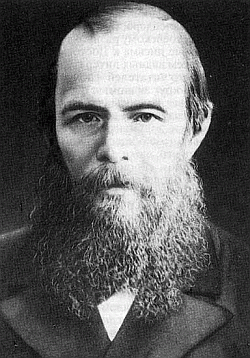
Fyodor Dostoevsky


When I spoke the other day about the Dictatorship of the Righteous, I was talking about Religion in a fundamentalist form, yet revolutionary in political form.
http://fatherdaughtertalk.blogspot.com/2015/11/the-main-theme-of-age-dictatorship-of.html

Every religion is anarchy at first: it breaks with the old norms, so is illegal and revolutionary. It is anarchic in its breaking of the old and bringing in the new.
Most religions end their revolutionary there. They may export their creed, and in that sense their missionary work is spreading religious revolution, but in the home provinces, the rule of the New Law pervades.

Religions, however, may yet be revolutionary in areas other than Faith. For example, they may be revolutionary in politics, such as those groups seeking to spread not only creed, but also political ideas, such as the Christian Dominionists and the Islamic Wahhabis.
The core of religion remains imprisoned in creed, whether for good or ill.

Thus, a new Religion is both anarchy and dictatorship, for as it breaks the old law, it establishes a new law. It both denies Law and affirms Law.

Does God change his mind, then? Is it time to move on from the old to the new? Has the established order lost the mandate of heaven?

This is even more of a question when there is religious upheaval within the same creed, such as the Protestant Reformation within Christianity. Things have changed. Has God changed?

Consider the history of events contained within the the Christian perspective of the change from the Old Covenant of Moses to the New Covenant of Jesus.
There is change.
No Christian would say God has changed his mind.

Most people would say that God had such transformations already incorporated within his infinite plan, and it is only from human imperfect understanding that it appears that the Holy has changed.

I would think God is not a list maker, nor a planner, nor an "intelligent designer", nor does he employ such folk on his staff.
God establishes the ground of being; all that would be has a chance to be.
The free will of humanity chooses among that which it may choose, and accepts that which is beyond  humanity's choice or desires.

If God choose one thing, then he might have to change.
God does not choose.
All states of being have a chance. Any state of righteousness has a chance of being immediately followed by immorality and any peaceable kingdom may be transformed into nature bloody in tooth and claw.

There is no determinism of fundamentalism.
By abolishing determinism, we do not affect the Holy.

Dostoevsky had a character once ask:
'Without God and the future life? It means everything is permitted now, one can do anything?' 

I would say that everything has a chance to be, but it is humanity's task to establish a pious moral order according to its understandings of the Holy upon that quantum field of probability.

As the determinism of the moral order disappears, the burden of choice weighs heavy upon us.

We then fly to the prison of fundamentalism to save us from our works for the Holy.

--


Saturday, June 27, 2015

Philosophy Takes A Holiday

Philosophy, Disguised As Prince Popoff, Toasts Miss Take (left) and Mr. Clap-Trap (right)


Asia Times
The problem with Pope Francis’ encyclical is that nature is nasty
By David P. Goldman on June 24, 2015
http://atimes.com/2015/06/the-problem-with-pope-francis-encyclical-is-that-nature-is-nasty/
[...]

The trouble with natural theology (the notion that nature itself points us to an understanding of the divine) is that nature herself is a nasty piece of work. When St. Francis of Assisi and his namesake, the reigning Pope, laud nature as “mother” and “sister,” they open a can of theological worms. Nature is no sister of mine. Christians like to view things in terms of teleology–their ultimate goal–and the teleology of the world we know is to be destroyed in a fireball.

[...]

I wrote in a 2012 essay:...

We are not the passive victims of nature. We strive to establish human dignity by mastering nature. We are neither gods who can grasp the infinite mind of the God of Creation, nor mere animals for whom evolution is destiny. We do not need to worry whether there is an Intelligent Design, nor whether we might grasp such a design if it indeed exists: As creative beings, we are part of the design. We do not know the full scope of the design, because we do not know what we have yet to accomplish. God does not need us to justify his position as creator; our task is nobler, and incomparably more challenging, namely, actually to advance his work of creation.

And while Phil is on holiday at the Maldives, we could feel the freedom to recast the last paragraph above:

We are not passive victims. We strive for dignity. We are not gods nor animals. We do not need to worry if there is an intell..., intelly..., in-telly-jint ! Deeee-sssine.... (whew!) nor something else.

There's a lot we don't know, but we try harder!

...

Amen!


--

Monday, June 15, 2015

Rational Fundamentalism


All fundamentalist religious traditions are attempts at creating a religion devoid of feeling and emotion, and establishing "rational" religion, no matter how odd and "irrational" such a venture may seem to others.

This tendency shares in the psychology of judicial "originalist" in the USA, who seek the meaning of the Constitution in what they consider to be the views and interpretations of the Founding Fathers.

Although these movements may attack speculative philosophies and theologies of their "liberal" opponents, in reality they are based on philosophy, on words, the "logos", the "kalam", the web of meaning and language. They find an original basis expressed in some linguistic form - usually a scripture or ancient document of law - and then they come to the crux of the matter, which is asserting (1) that the document is always true, and (2) that the interpretation of the document by "right-minded" individuals is always true and incorrigible.

To express these views and to persuade others of the justice of their cause, they write and orate and argue; they spin a new web of philosophy, logic, and often invective.
These movements must be viewed in time, for they make no sense if they lack sufficient time between the era of the original document or scripture and the present. There must exist a certain amount of time to allow differing opinions to form, and it is these opinions and those who support them that the fundamentalists fight.

In other words, Fundamentalism is a historical development, and an attempt to re-create the past, which process necessarily involves imagining what the past was actually like: creating a virtual reality of the past and placing it within the present.
This is a complex rational process which seeks to provide a logical basis for religion or law, and in the case of religion, it rejects the foundations of feeling and emotion which underlie man's approach to the Holy, turning rather to credos and formulae of a limited and restricted nature.

A limiting and restricting philosophy is still speculative, and as such fundamentalism is that which ignores the mysterium and the tremendum of the untamed universe, a universe which seems to dance freely like unruly Bacchantes when seen through the glasses of mysteries, powers, feelings, and emotions.

We have forgot the history of the American Revivalist movements of the 18th and 19th centuries. These religious phenomena were often looked down on by European scholars, for the Revivalist exuberance was anarchic in its overflowing emotion.
The American Revivals - which have faded from our jaded souls - were a dance for joy in the wilderness!
If Church and State had not been separated by the Founding Fathers, it is very likely that certain States may have used force against the Revivals, as in Europe and other countries new ideas of religion were not allowed to grow too big or were wiped out.

We live in the Era of Doubt, and we seek that which is totally Other, but we haven't a clue, so our doubt grows and grows.
Fundamentalism seeks to banish Doubt by killing enthusiasm, restricting amazement, and destroying wonder.

--

Saturday, April 11, 2015

I Expect God


Yesterday someone asked me to clarify what I meant by saying, "I do not believe in God, rather I expect God."

After thinking a bit, I think it is very much a relationship of Conversation: God and I are in a conversation, and when one speaks, that speaker expects the other to listen, attempt to understand, and to respond.

As there is a Worlding process occuring, God and mankind sit in parliament with each other.


Let me refer to a recent post:

The Grey And God And..... דער שׂטן
http://fatherdaughtertalk.blogspot.com/2015/03/the-grey-and-god-and.html


Towards the end of the film The Grey, Liam Neeson's character yells out to God that if He exist, this time would be a fine time to manifest Himself, since Neeson's character. Ottway, is the last man alive, and is hunted by the wolves.

That is not the expectation of God, that is not a conversation with God.
Just as God cannot compel us, we cannot compel Him.

Of course, in the film the end is an endless metaphor, where Ottway becomes a Power in the World, a totem-wolf animal. The film points to the resolution of our eternal questions, and leaves us to find our way from the wolves den.
--

Monday, March 23, 2015

Weekend At The Cinema


We went Sunday to see Hitchcock's Rear Window on the big screen. I have seen it at least 3 or 4 times on a large TV screen, but never in a movie theater before.

Grace Kelly is exquisitely beautiful. Having seen her on TV, I have never received the full packet of information about her. She was an arrest of the breath. I had to remind myself to inhale, exhale. Her large image on the screen was vast with intimacy.
And her presence was so very less-is-more.
Consider the hags one sees today on TV: The Housewives of New York or Los Angeles...
Think The Kardashians...
Think Bruce Jenner....  ( and I first saw The Kardashians about 3 or 4 years ago, and I asked who that spinsterish maiden aunt was, only to have She-who-must-etc. tell me that that was Bruce Jenner, Olympian!  And today it seems people are surprised that he is trans-gendering into Aunt Selma.)
Think how thick the make-up is, and how much work is done on the face, and the arcane technologies of poisons injected into sagging muscles!

James Stewart was blue-eyed iconography, middle-aged and restless; Thelma Ritter played She-who-must-be-obeyed's Aunt Stella, the visiting nurse in Manhattan; Wendell Cory was a detective who provided the male counterpoint to Miss Kelly's exquisitely appointed presence ("he was a gentleman from soul to crown..."); and Raymond Burr was the creep.
The set consisting of 31 or so apartments placed around a central green square was terrific, and the tableau presented was deep and populated in a way that TV just shakes it head and laughs at the notion of recreating it.

The color!
I have written recently about the color in La Grande Belleza, penetrating color.
We have been awash in films that are drab, khaki, grey, and dark. Even those films of the present which are not noir-ish are washed out.


Next...


Similarly, the color in Agnes Varda's Le Bonheur was startling.
I watched that film Sunday night. Color and camera.
However, it struck me as an Elvira Madigan that has hidden well any sense of life's pain and suffering. It was decidedly an "odd" film: oddly conceived and scripted, and that quirkiness of story hurt the film.
(Both Agnes Varda (Bonheur) and Bo Widerberg (Madigan) uses Mozart in their sound track, which may explain why I thought them so close.)

The NY Times reviewer wrote
A.H. WEILER
Published: May 24, 1966

"LE BONHEUR," officially translated as "Happiness," landed like a cinder in the eye at the Fine Arts Theater yesterday.


The film starts with the family of Francois, a carpenter; his wife, Therese, a dressmaker; and their two children.
A review in IMDb:
A Brilliant and Provocative Film
Author: Howard Schumann from Vancouver, B.C.
8 July 2002
http://www.imdb.com/title/tt0058985/reviews
When Francois is away on business, he meets an attractive telephone operator named Emilie. Soon he declares his love for her and claims that he has enough love within him to include her in his life, "I love you both and if I met you first, you would be my wife". Being honest and open, Francois tells Therese that he has loved another woman for over a month, but says that his love for her and his family remains stronger than ever.
The love that Francois experiences is - the film states again and again - a natural occurrence, an addition, not a subtraction. However, Therese cannot separate herself from what has become her identity as wife and mother, leading to tragic consequences. She was, in the words of the lovely song, "Tree of Life", "only known as someone's mother, someone's daughter, or someone's wife."

This review, I think, repeats the error of the film.

Therese was a wife; she was a mother; she worked actively as a dressmaker.
She was a being who was actively in life.
Only in our talking about the film does she become one "known as someone's mother, someone's daughter, or someone's wife". There is no indication that Therese reflects on her being-in-life as one of motherhood, wifehood, or anything else. She is engaging with life actively!

In the film - and in the minds of many of us - Therese has become an icon which can be taken down and substituted for by a newer icon.

Therese is embodied in Life, and the film treats her as if she were not.
It treats her as a disembodied concept: "mother", "daughter", "wife".

So in the film, when Francois openly tells her about his new love, which is an addition to, not a subtraction from his love for Therese, she makes love with him in the wooded park, then while he is asleep, conveniently drowns herself.
Funeral, another marriage, a new mother, and life goes on.

I must say this film was disturbing, but I could  not put it into words beyond those which I have already written, and I felt there was more to say about it.

Then......!


Then I saw White Zombie, with Bela Lugosi.

IMDb Storyline:
Young couple Madeleine and Neil are coaxed by acquaintance Monsieur Beaumont to get married on his Haitian plantation. Beaumont's motives are purely selfish as he makes every attempt to convince the beautiful young girl to run away with him. For help Beaumont turns to the devious Legendre, a man who runs his mill by mind controlling people he has turned into zombies.

Zombies, Stepford Wives, and people without souls, only monikers and roles that they play.

To be successful, a film must leap beyond the roles it creates and render the characters alive. A story needs characters, people to play the role of hero, villain, lover; it needs morals and philosophy, and religions.
But it must make them alive as beings-in-the-world, not as zombie icons without soul.
Le Bonheur was White Zombie transferred from Haiti to Paris, from black-and-white to color.

This error is repeated in much of our art, much of our philosophy, much of our religion (which interposes a church between God and mankind), and most of our politics.

--


Wednesday, March 11, 2015

Are We Living In A Computer Simulation?


I have to admit that Nick Bostrom's paper on whether we are living in a computer simulation or not is not really about whether we are living in a computer simulation or not.

I mean, I like the paper, only most people seem to give it a meaning and an importance which it does not seem to merit.
It is about 3 statements and the probability of each under various major-type assumptions.
It is logic and probability and deduction.

There is no real Ontological Commitment; i.e., a statement that such simulations really do exist.
The best we can get is that one of the statements must be true, one of which is that we are living in a computer simulation. Even so, because a statement is necessarily true in a Logic, that need not carry over into Being.
We like to think it does, because that is a fine bit of housekeeping, and a job well done, and God is in His heaven, and all is right with the world...
There's some nice logic, and that is no small bit of genius. We need not extend the thing to greater issue.

Anyway, Mr. Bostrom's speaks of the finely-grained computer simulations of the possible futures, finely-grained meaning that the detail is almost of the infinity that we perceive our lives to be: an endless ladder from immense island universes to smaller and smaller particles, and energies that constrain and release on cue, without some gaffe-stop-action of lost seconds of feed due to a slow down in the flow of visual data.

Which brought to mind the fact that we already have good examples of simulations of large numbers of lives, only in a coarse-grained manner:

the marginalized!

the homeless! the displaced! the refugees! ......  the victims!

I mean, the detail of their simulated lives is in no way sufficiently fine as to make us feel their anguish, is it?
Their pain and suffering is more iconic, I'd say, rather than immediate.

And I suppose this is what Mitt Romney was talking about when he did cleave a line in society; he thought in terms of the finely-grained simulations versus those coarsely-grained ones, who - really, we must admit - are just too poorly rendered that we may feel compassion for them.

They are more like stick figures.


Tragic stick figures, granted, but stick figures no less.

Not quite Emoticons....
More like Schmo-ticons

--
note
Mr. Bostrom does not say one of the three statements must be true, merely that it is highly likely to be true.
My gaffe... but also a gaff to skewer philosophical... stuff.

--

Dark Matter Explains Soccer Ball Theory!


What a thrill it is to live in such exciting times!
Our understanding of the universe in which we live has undergone more changes in 100 years than it has in the previous 100,000. Even now Science tries to discover the secrets of Dark Matter. Dark Matter is supposed to be a prime constituent of the universe, but it has never been observed and was originally included into theories to explain why the universe was, after all, not literally flying apart in its rush of expansion.

Dark Matter has mass and is invisible. When the "matter" is settled, another revolution in thought will have occurred; that's about the 344th paradigm shift in my lifetime. The Dark Matter is so preponderant that some scientists have described the observable entities of the universe as floating within a wash of Dark Matter, this dark matter keeping everything compact, so to speak. If this is not the ancient - not to say discarded-notion of the Aether, then I don't know what is.
The Aether goes back to prehistory, I'm sure, and we catch on to the grab bar of its careening trolley about the time of Heraclitus. The Aether is a medium in which the entities of the universe swim about in ptolemaic regularity. Newton saw no need for the Aether. Subsequent generations saw no proof for the existence of the Aether, and so it was consigned to the dustbin of thought. In fact, I think the Aether hung around the old pool hall of Natural Philosophy, hustling games from kids, until J.J. Thompson proved that the speed of light was a constant.

Not so fast, pally.

We are digging that concept back out of the tip, dusting it off, and bringing it into the house. The story of Dark Matter and Aether reminds me mightily of Boudou Sauvé des Eaux, or Down and Out in Beverly Hills, take your pick. wherein the disreputable downer-on-his-luck is samaritaned, brought in and fed, and is taken to buy a new suit of clothes.
And the old guy looks pretty good when you dress him up.
And, pace my grandfather, you apparently may make a silk purse from a sow's ear.

I touched on this refurbishment of old concepts- sort of Flip This Paradigm or Conceptual Intercession-once before in http://fatherdaughtertalk.blogspot.com/2007/02/football-of-pythagoras.html wherein we see :

More precisely, we may inhabit a dodecahedral cosmos. It is, according to the scientists, the best way to account for the latest satellite observations.http://news.bbc.co.uk/2/hi/science/nature/3175352.stm

and a dodecahedron is but a soccer ball, and this soccer ball was what Pythagoras said was the Holkos, the prime element which contained all the other elements of the universe. So Pythagoras beat Science to the punch and had to wait 2,500 years for royalties.


Also Democritus with his Atomic Theory.
People will say that the ancient ideas had no connection to the modern scientific ideas. This claim is based on the fact that the ancient did not have a scientific method with which to cast their theoretical nets wide upon the face of the Deep, so to speak. (This view ignores the Antikythera device, as well as Archimedes and many others.)

However, I find it striking that the same essential ideas recur in grossly differing milieus. It is as if the human mind is constituted to be aware in certain ways and certain ways only, just as the eye sees only in the visible spectrum. Thus, certain great motifs, emblems, paradigms and templates of understanding are repeated throughout history.

Thus, the Aether as the medium wherein we all bathe. If I were to say "...wherein we all float," then the effect is transformed into something alien and frightening: Pennywise of Stephen King's IT. However, the medium where we swim, bathe; that is comforting. The aetherous medium has both aspects of Love and Comfort versus Fear and Flight, combining these opposites within its meaning. It is a very wide ranging concept, therefore.

We live our lives between The Fear of God and The Love of God. There will always be an Aether and there will always be a Vacuum; the Full and the Void; the Plethos and the Kainon. We fast to purge, to empty, to be void in body and to be abased and humble in the mind. We eat to fill, to feast, to be sated in body and to be exalted and drunk with nutrients! All life is what we already know, see, do, and feel.

We only have to try to pick Life back up from the dirt ( or from the River Seine or from the backyard swimming pool as in the films mentioned above), brush it off (or blow-dry it out), and everything will be...not necessarily fine, but everything will be better........

--

Tuesday, February 24, 2015

The Fly In The E-mail Fly Bottle 2

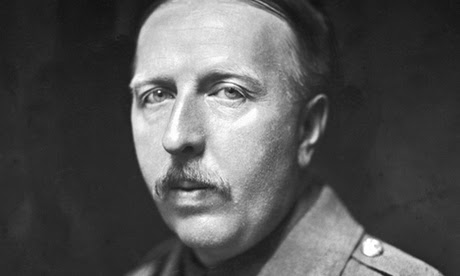
 Ford Hermann Hueffer, alias Ford P. Ford


I suppose if we have a set defined as follows:

S= The set of all statements, definitions, and sentences containing the words "black muslim"

then S is a subset of itself, and we may lead right into Russell's paradox.


All of which reminds me of my favorite novelist, Ford Paradox Ford.

--

Wednesday, February 18, 2015

One Touch Of Nature


"One touch of nature makes the whole world kin..."
Troilus and Cressida,
Shakespeare

Picture from the Oregon Shakespeare Festival
synopsis of Troilus and Cressida
The war has lasted seven drawn-out years. Few illusions remain about the glory of armed conflict—or anything else for that matter, including love. This staging was imaged as in the contemporary Middle East.


So, now a man seeks to build a large winery in Napa County according to the

Anderson Valley Advertiser
Sebastopol v. Winery

by Shepherd Bliss, February 11, 2015
... The applicant, 32-year-old Napa County winemaker Joe Wagner, briefly introduced his winery, which would reportedly be the 15th largest in Sonoma County. His family has grapes or wineries in four counties. He asserted that this site was selected because of “its great potential on a heavy thorough-fare.”
“We are not considering being organic,” he admitted, revealing that he uses conventional chemicals, which would damage this unique environment. Wagner acknowledged that it would “increase truck traffic and emissions.” He suggested, “This would be a better use of the property.” He also agreed that he had submitted “incomplete studies.”
 "All he did was throw buzz words out there that he thought would work,” commented grape grower Bill Shortridge. “There were no details. No answers. He brought nothing to the table, which leads me to believe everything we are worried about would occur." ...
Not to mention the water requirements and the Drought.

Then, in Ancient Egypt,
Al-Ahram Weekly
Animals in ancient Egypt

Far from superstitiously worshipping animals, the ancient Egyptians had perhaps 
surprisingly sophisticated attitudes to the natural world, writes David Tresilian
http://weekly.ahram.org.eg/News/10397/23/Animals-in-ancient-Egypt.aspx
... But it seems that animals were rarely worshipped in themselves, being seen either as manifestations of qualities of the gods with which they were associated, or used as votive offerings particularly in the Late Period. An important exception to this rule was the cult of Apis at Memphis, however, a sacred bull thought to incarnate the god Ptah and worshipped during its lifetime...


Qualities of the gods made clear and open, an epiphany of showing-forth.

If God made the world, was not this creation a making manifest of some love of God towards Adam?
If the Earth be not properly husbanded and taken care of, do we not scorn that manifestation?

It is our duty to exercise proper husbandry, not to exploit.

Exploitation implies clearly a hierarchical structure where the lesser beings benefit the greater, and those benefits do not flow both ways. If the same benefits were mutual, the ladder of hierarchy would disappear, for there would be no lesser rungs of humanity to stand up on.

What of Fracking?
Does it not take the Earth as a manifestation of God's concern for our welfare and effectively spray over it with crude graffiti?
Does this not treat the Earth as one of the lower rungs in the ladder of hierarchy? Earth is there for the exploitation and benefit of the higher ups.

Referring again to Ancient Egypt:
Perhaps the ancient Egyptians did not see this system in hierarchical terms, since a god could be manifested just as readily in a scarab beetle or a frog as in a cat, a wild dog, or a baboon.
Perhaps man is in the image of God, and so are the animals and lands he husbands. What shall he exploit when the face of the divine is everywhere?

And the last question is why is there such great hatred of the manifestation of the divine within the material world?
Islamic fundamentalists hate people praying at the tomb of the Prophet. Developers hate anyone seeing the face of divinity within the strata of the Earth which they wish to tear up, breach, frack, or violate.

The simple faith of common people who see the hand of God everywhere is much despised, which is the source of much woe today. God is hidden in dogmatic learning, and manifestations are mocked.

--


Saturday, February 07, 2015

Upon Reading St. Patrick: The Judaeo-Christian Tradition


Trinity


Moses  ("Elohim")
Jesus,
St. Patrick,
J. Robert Oppenheimer
 ...

at this point we ask whether we add The Matrix.
Are we joking, or are we wandering?

--

Tuesday, January 13, 2015

Reading About France : The Beatitudes


 Pope Innocent X   (not actually relevant to the body of the post)


"Bienheureux les artisans de paix, car ils seront appelés fils de Dieu"

"Blessed are the peace makers, for they will be called sons of God"


I remembered "children of God" rather than "sons of God", but upon looking into my Greek NT, I saw clearly:

μακάριοι οἱ εἰρηνοποιοί, ὅτι [αὐτοὶ] υἱοὶ θεοῦ κληθήσονται.

and   υἱοὶ   is most definitely "sons".


We could meditate right about now...
I did and it came into my head that we live in the time of

"blessed are the peacemakers... yadda-yadda-yadda."

Think of what happens when one makes a satire of the Beatitudes.
Instead of insulting cartoons of various entities, what happens when we satire the Sermon On The Mount?

Why, you get Today's World, all wrapped up in a bow and looking as murderously fine as a rendition of Pope Innocent X by the painter Francis Bacon:


--

note
This is the first time I tried this method of posting:
the pictures are not literally related to the prose, but are more illustrative of some other parallel and parabolic point of their own, implied by - perhaps - but not stated outright within the writing.
The second icon, Jesus, actually does directly refer to the Beatitudes, however.

Monday, January 12, 2015

Holes In The Credo

Find the True Linen Threads, and Find the False.


An interesting thing about religious belief systems is that they do not really fall apart if some of the basic proposition of faith are denied or changed.

For example, there are many Christians today who have no use for the poor and homeless, and they are quite vocal about it. It is just as if they hear a Sermon on the Mount from the Anti-Christ.
Yet, their Christian lives are not impoverished, not materially changed, not spiritually transformed. They are considered Christian, and they live their lives accordingly.

Even though they seem like Christians with a big, gaping hole in their Credo.

ANd in Wikipedia, we read:

Nestorianism
Nestorianism is a Christological doctrine advanced by Nestorius (386–450), Patriarch of Constantinople from 428–431. The doctrine, which was informed by Nestorius' studies under Theodore of Mopsuestia at the School of Antioch, emphasizes the disunion between the human and divine natures of Jesus. Nestorius' teachings brought him into conflict with some other prominent church leaders, most notably Cyril of Alexandria, who criticized especially his rejection of the title Theotokos ("Bringer forth of God") for the Virgin Mary. Nestorius and his teachings were eventually condemned as heretical at the First Council of Ephesus in 431 and the Council of Chalcedon in 451, leading to the Nestorian Schism in which churches supporting Nestorius broke with the rest of the Christian Church. Afterward many of Nestorius' supporters relocated to Sassanid Persia, where they affiliated with the local Christian community, known as the Church of the East. Over the next decades the Church of the East became increasingly Nestorian in doctrine, leading it to be known alternately as the Nestorian Church.

Nestorianism is a form of dyophysitism, and can be seen as the antithesis to monophysitism, which emerged in reaction to Nestorianism...

Nestorians reached China and left their mark. Their lives of faith were not impoverished by their so-called heresy.

Arianism
Arianism is the nontrinitarian heretical, theological teaching attributed to Arius (c. AD 250–336), a Christian presbyter in Alexandria, Egypt, concerning the relationship of God the Father to the Son of God, Jesus Christ. Arius asserted that the Son of God was a subordinate entity to God the Father. Deemed a heretic by the Ecumenical First Council of Nicaea of 325, Arius was later exonerated in 335 at the regional First Synod of Tyre,[1] and then, after his death, pronounced a heretic again at the Ecumenical First Council of Constantinople of 381.[2] The Roman Emperors Constantius II (337–361) and Valens (364–378) were Arians or Semi-Arians.

This is one great difference between religious discourse and scientific discourse, this ability to transform.

The religious philosophers will have problems, but the faithful will not. The philosophers will complain of contradictions and inconsistencies, but not the faithful:  their faith transforms their lives and their lives flow from the past to the future...
It is all like a great river.

Science and Philosophy and Logic as we have developed them in our Western Tradition cannot allow holes in the Credo, or gaps in the Canon.

When we talk of "belief systems" we forget this.

We like to think that the proposition "I believe in X" must be true or false.
But that feeling of necessity is derived from the philosophers, from the scientists, and from the logicians.

The Faithful have demonstrated for all of human life that Faith is not "atomistic" and "axoimatic"; rather, it is a great carpet of many-colors with infinite selvages blowing in a ceaseless breeze.

--

Monday, January 05, 2015

More Than A Pop-Up Book?


We create the scripts of life.
We are not isolated subjects observing some independent reality, but neither does each one of us create their own solipsistic world.

First, we negotiate with each other to create our world: what we want, how that infringes upon what others want, our needs, our economies, our beliefs - how do they all fit in with those of everyone else with whom we are in contact and negotiation with?

Second, the script itself is not a mute object. Once written or imagined, it takes on its own existence (like Sponge Bob Squarepants' Franken-Doodle, which - once sketched - grabbed the pencil and set off on a path of independence and anarchy!).
In a sense, now we negotiate and palaver with our own scriptings.

What is the function of our concept of God?
Do you use it as a paradigm of legality and justice? Is God the source of all forgiveness? Is God love?
Is our concept of God a mixture of these and more?

God is independent of our thoughts, but our thoughts of God are not independent of our thoughts!
God is not dependent upon our consciousness, by not so our consciousness of God!

Is there a great chain of similarity of being?
As God created us, and observes the complexity wrought by free human will, do we create our understanding of Life, and find that we have instilled an unforeseen complexity into our scripts of the way things are?

As it is, we usually deal with unforeseen complexity by building so many concepts with it and around it that we can no longer sense its vibrant heart.

Written words are pale imitations of life. That is why poets used to be supreme.

Then there came more and more ways of illustration, which provided more on the infinite detail of the living and breathing world.

Then came the films and movies which are even more filled with the details of life.

Is God a concept put within a one-dimensional book, or does God pop-up from the flat page and overwhelm us, our senses not being able to keep up with the sheer amount of information  -
God is that which cannot be grasped by any means...
Dogma is by definition false once it is propounded and written down.
God is that movie that flies off the scene and bids us follow...

and we ferverishly take notes and make Tweets and post to Instagram.......  !

--


Saturday, December 27, 2014

The Relativity Of Morals


 Rudyard Kipling, Author Of The Jungle Book


Moral Relativism has been made a big deal in our time.
I consider it another one of those conceptual prisons we find ourselves lured into, then become too lazy and befuddled to find our way out from. It is, indeed, a classic fly in the fly-bottle.

I was reading about Mary Zimmerman's production of  Disney's The Jungle Book in Chicago, and some questions posed to her as to whether Rudyard Kipling's racism were a problem for her.

Chicago Magazine:
http://www.chicagomag.com/Chicago-Magazine/C-Notes/May-2013/Mary-Zimmerman-Race-Gender-Jungle-Book/

How Mary Zimmerman Handled Kipling’s Racism and Misogyny in a New The Jungle Book Musical
The adapter extraordinaire dives into the controversial aspects of the story she’s staging at the Goodman Theatre.
By Catey Sullivan
...The Jungle Book, and King Louie in particular, has been criticized as playing into racial stereotypes. Was that a concern when adapting the film?
Yeah, it was a concern. But I’ve decided to make it not a concern. I know what the lyrics say and how squeamish you can get about that. But we’ve done some things with casting that I’m not going to give away, but that I think will remove that element. I know what the lyrics of [“I Wanna Be Like You”] say, but look at the original—it’s sung by Louis Prima. He’s the King of the Swingers. It’s something I think where the racism is in the eye of the beholder, you know? If you look at that as racist, doesn’t that say more about what you’re projecting on to the character? There’s clearly politics in the [British] accents Disney used, but I don’t think we’ll be using accents at all...

And it occurred to me that racism is not in the eye of the beholder, until the point is reached when one begins talking about racism.

Once individual speakers begin a palaver about racism or any moral virtue, it does indeed take on the appearance of some notion of relativism, or - as is often expressed - "true for me."

There are absolutes until we begin to image and speak; then we break the absolutes down into a negotiation of individual expressions. These expressions are mixed into a communally agreed upon world view, not because that world view is true, but because we actually agreed upon it.

Our communal world view is "relative" to us in the sense that we negotiated and caucused it together.

But racism is not in the eye of the beholder.
There are moral absolutes.
There is no Atomism in Ethics....

Philosophy broke down into (1) Atomism, which modern science has as its realm, and (2) Aristotle, Aquinas, Averroes, and Akiba, which is the proper realm of ethics.
Religion suffers most in the modern day by ignoring the active participation of religious people in the active negotiation of the communal vision. Our common belief is mostly a creed, a Credo, a Shahada, which acts like a person's cartel of inclusion into a religion, but avoids the strenuous "quest" of that person to seek the absolute of salvation.

--

Tuesday, December 23, 2014

In The World Of The 12 Monkeys


... not over against it; not as a isolated subject viewing it as an object.

We have been too long enslaved by the Cartesian dualisms of the thoughtful soul which perceives and thinks about the body and the world in which the body finds itself.
The thinking "we" are in the world, negotiating meanings, palavering, caucusing, deal making and breaking,  selling and buying in the market, making love and war. In all of this, we rarely ask which propositions we use are "true". Rather, we use those words which are part of our lives already and work to make another daily extension into the foggy future.

Quote from a book review:
http://integral-options.blogspot.com/2014/12/best-philosophy-mind-and-consciousness.html
The enactive approach is a growing movement in cognitive science that replaces the classical computer metaphor of the mind with an emphasis on biological embodiment and social interaction as the sources of our goals and concerns. Mind is viewed as an activity of making sense in embodied interaction with our world...
 Activity, act, doing.

As Sister Maria says in The Great Beauty  "Poverty is to be lived... not to be talked about".

We talk about everything and get nowhere. We talk about politics and terror and epidemics, and then spend time surfing for more discussion. A few years ago we talked about the Federal deficit incessantly, and now no one mentions it.
It is old hat.

We are not truly living when we are jabbering, chattering, and jibbering. We are only partly alive. We must act.
The future generations will travel in time, and avoid our era, referring to it as the Zoo of the Army of the Twelve Monkeys...
... the first monkey sees all evil, and the next eleven go on cable TV to discuss it.

--

Monday, November 17, 2014

The World As Thing

Siefried Kracauer

Reading Siegfried Kracauer's great book From Caligari To Hitler: A Psychological History of the German Film published in 1947.  In the present section, he is writing of the German films in the early years of The Great Depression, and has just finished discussing UFA's production of Mensch Ohne Namen (Man Without A Name) made in 1932 and starring Werner Krauss.
The next paragraph begins:
Times were indeed so bad that even qualified specialists could not count on re-employment once they had been dismissed.
Indeed!We have gone through such times.

Kracauer picks up the thread with a discussion of Die Gräfin von Monte Christo (The Countess of Monte Cristo) of 1932, another UFA film. Brigitte Helm is cast as a film extra cast as a leading lady. While shooting at night, she drives her luxury car used in the film to a real de luxe hotel, where she is treated royally because of her impressive luggage emblazoned with "Countess of Monte Cristo".
Things happen, and eventually she is found out. With a flair for publicity, the film company soothes over things with the hotel and turns the escapade into a great front-page story which is good for everyone involved: the film is on everyone's lips and she gets a good contract.
So ends that story,
...proving conclusively what all these screens opiates tended to demonstrate: that everyday life itself is a fairy tale.

It sounds so much like Reality TV, which itself is crudely and cheaply scripted, and is so remote from "reality" that when a member of the cast commits suicide, all references to such unpleasantness have to be removed from the film already shot... all this in order to maintain the diseased  fairy tale illusion of our modern lives.

We allow illusions, because we treat the world as an "it", an object which we manipulate.
When we pray to God for something, we are treating the Holy as an object to be cajoled and manipulated into giving us miracles.

Only the film companies can work miracles!

--
reprint
re-edit